Automation has transformed the electroplating industry by improving productivity, consistency, and safety. Modern industries are rapidly adopting Automatic Electroplating Tank Plants to reduce labor dependency and achieve uniform plating quality.
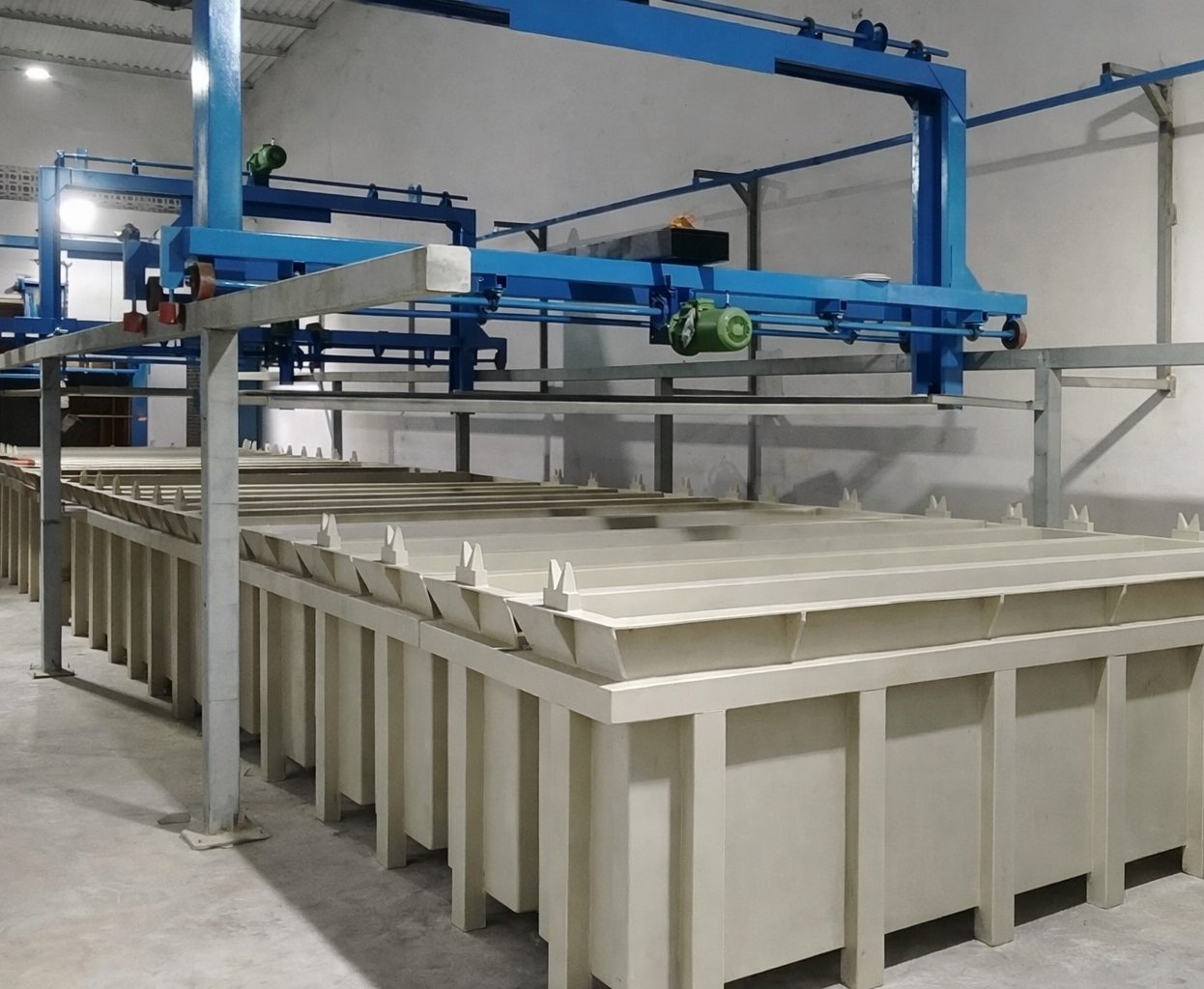
What is an Automatic Electroplating Plant?
An automatic electroplating plant is a fully integrated plating system where material handling, dipping cycles, chemical dosing, and rinsing are controlled through automated mechanisms such as PLC systems, hoists, and conveyors.
These plants are designed for:
- High production output - Process large volumes efficiently
- Precision coating thickness - Consistent results every time
- Reduced human error - Automated quality control
- 24/7 operation capability - Maximize production uptime
Components of an Automatic Electroplating Tank System
A complete automated plating system consists of several integrated components working together:
PP / PVC Electroplating Tanks
Chemical-resistant tanks that hold plating solutions, designed for durability and corrosion resistance.
Hoist / Transport System
Automatically moves components between tanks with precise timing and positioning.
PLC Control Panel
Brain of the system that controls timing, dipping sequence, and automation cycles.
Heating System
Maintains required solution temperature for optimal plating results.
Filtration Unit
Removes impurities from chemicals to maintain solution quality and extend bath life.
Fume Extraction System
Ensures worker safety and proper ventilation by removing harmful chemical fumes.
Rectifier & Power Supply
Provides controlled electrical current for the electroplating process.
Rinse Water System
Automatic rinsing stations to remove chemical residues between processes.
Working Process of Automatic Electroplating Plants
The automated plating process follows a precise sequence controlled by PLC programming:
Loading
Components are loaded onto specially designed jigs or racks at the loading station.
Pre-treatment
Automated hoist transfers components through cleaning, degreasing, and acid pickling tanks.
Electroplating
Components are immersed in the electroplating bath for precise coating deposition.
Rinsing
Automatic rinsing removes chemical residues between each processing stage.
Post-treatment
Passivation, drying, and any additional finishing processes are completed automatically.
Unloading
Finished components are automatically transferred to the unloading station for quality inspection.
Key Feature: All steps are automated and programmable through the PLC control system, ensuring consistent timing, dipping cycles, and processing parameters for every batch.
Benefits of Automatic Electroplating Plants
Automation brings significant advantages over manual plating operations:
Higher Productivity
Processes bulk components continuously with minimal downtime, increasing output by 300-500% compared to manual systems.
Consistent Quality
Precise control of timing and process parameters ensures uniform coating thickness and quality across all components.
Reduced Labor Cost
Requires minimal manual intervention, reducing labor requirements by 70-80% and associated costs.
Chemical Efficiency
Controlled chemical dosing and reduced drag-out minimize chemical consumption and wastage by 30-40%.
Improved Safety
Reduces human exposure to hazardous chemicals and eliminates manual handling risks.
Process Control
Digital monitoring and control of all process parameters with data logging for quality assurance.
Industries Using Automatic Electroplating
Automated plating systems are essential for industries requiring high-volume, consistent quality coating:
Tank Materials Used in Automatic Plants
Automatic plants use specialized tanks designed for specific chemicals and temperatures:
PP Electroplating Tanks
Polypropylene tanks for general electroplating applications, excellent chemical resistance.
PVC Chrome Tanks
PVC tanks specifically designed for chrome plating with chromic acid resistance.
PPH Tanks
Polypropylene homopolymer tanks for high-temperature applications.
FRP Tanks
Fiber Reinforced Plastic tanks for specialized chemical applications.
Material selection depends on chemical type, operating temperature, and specific process requirements.
Why Choose Professional Manufacturers
Automatic electroplating plants require precision engineering and integration expertise. Professional manufacturers provide comprehensive solutions:
Plant Layout Design
Optimal arrangement of tanks and equipment for efficient workflow and space utilization.
Tank Fabrication
Custom fabrication of chemical-resistant tanks using industrial plastic welding techniques.
Automation Integration
Integration of hoists, conveyors, PLC controls, and monitoring systems.
Installation & Commissioning
Complete setup, testing, and training for plant operators.
Maintenance Support
Ongoing technical support, spare parts, and maintenance services.
Beula Plastic Engineering – Electroplating Plant Specialists
Based in Chennai, Beula Plastic Engineering has extensive experience in designing and manufacturing automated plating systems:
Our Expertise Includes:
Our solutions are customized for specific production capacity, plant layout, and industry requirements, ensuring optimal performance and return on investment.
Conclusion
Automatic electroplating plants are essential for industries aiming for high productivity and premium plating quality. Investing in automation reduces operational costs while improving output consistency and product quality.
Key Takeaway:
For reliable plant fabrication and installation, partnering with an experienced manufacturer ensures long-term operational success, technical support, and optimal return on your automation investment.